Port Vila Weather by Month: Wet Season, Cyclone Season and the Best Time to Visit
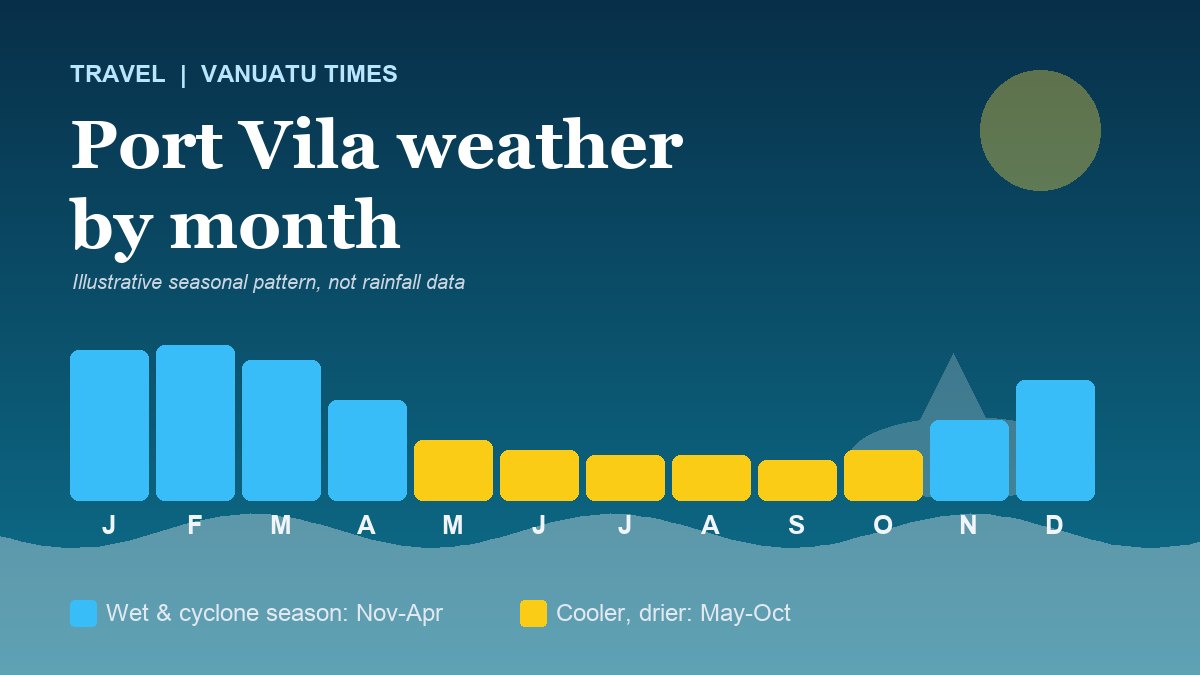
Short answer: Port Vila is warm and swimmable all year, but it has two very real seasons. From November to April it is hot, humid and wet, and those months are also Vanuatu's official tropical cyclone season. From May to October it is cooler, less humid and noticeably drier. If you want the most settled weather, aim for May to October; if you travel in the wet season, build some slack into your plans.
Port Vila sits on Efate, about 17 degrees south of the equator, near the middle of the Vanuatu archipelago. That gives the capital a tropical maritime climate: no cold season, a warm sea, and rain in every month of the year, just far more of it in the southern summer. This guide explains what each part of the year feels like on the ground, how cyclone season actually works and how to plan a trip around it. For the city itself, from the market to the waterfront, see our Port Vila city guide.
The two seasons at a glance
The Vanuatu Tourism Office describes summer, November to March, as averaging about 28°C and often hot, wet and humid, and winter, April to September, as averaging about 23°C. The sea ranges from roughly 22 to 28°C, so swimming works in every month.
| Season | Months | What to expect |
|---|---|---|
| Hot, wet season | November to April | Highs around 30°C, high humidity, heavy showers and thunderstorms, cyclone risk (highest in January and February) |
| Cooler, drier season | May to October | Warm days, cooler nights, lower humidity and less rain, though some still falls every month |
Port Vila weather month by month
January and February: the peak of the wet season
These are the hottest and stickiest months, and the Vanuatu Meteorology and Geo-hazards Department (VMGD) says they are also when cyclones are most frequent. Expect warm nights, sudden downpours that often clear within an hour or two, and occasional days of heavy, settled rain when a tropical low sits nearby. The sea is at its warmest. Travel is perfectly possible, but book refundable where you can and keep an eye on forecasts.
March and April: still wet, then easing
March is firmly in the wet season and has a history of serious storms. Cyclone Pam, a Category 5 system, struck Efate and Port Vila in March 2015, and in early March 2023 cyclones Judy and Kevin hit Efate within days of each other. April is the transition month: humidity starts to ease towards the end of it, but the season officially runs until 30 April. Cyclone Harold battered the northern islands in April 2020, and we covered the long recovery in our report on rebuilding after Cyclone Harold.
May and June: the good window opens
Rain falls away noticeably from May, although Climates to Travel notes that monthly rainfall on the central and southern islands still stays above about 100 mm even in the drier months, so a shower is never out of the question. Days are warm rather than hot, the air is fresher, the landscape is still green from the rains and the cyclone risk is very low. It is a good time for walks, Efate's waterfalls such as Mele Cascades, and boat trips around the harbour and offshore islands.
July and August: the coolest months
Midwinter in Port Vila is mild by most standards, with the daily average dropping to about 22°C. The nights are what surprise visitors: on the central and southern islands they average around 17 to 18°C, and cool spells can push them lower, so pack a light jumper for evenings by the water. The south-east trade winds blow steadily, which suits sailing but can make exposed snorkelling spots choppy. The sea cools a little but stays comfortable for swimming.
September and October: warm, dry and settled
Temperatures climb again while humidity stays moderate, and many people consider this the most pleasant stretch of the year. Less rain means less run-off into the lagoons, which generally helps underwater visibility; our guide to diving Vanuatu's underwater world covers the best sites. One caveat for late October: the season boundary is not a wall. In October 2023 Cyclone Lola became the earliest Category 5 cyclone on record in the region, reaching Vanuatu about a week before the official 1 November start of the season, according to the Secretariat of the Pacific Regional Environment Programme (SPREP).
November and December: the heat returns
The cyclone season officially opens on 1 November. Storms are usually less frequent early in the season than in January and February, but humidity builds quickly, afternoon thunderstorms become common and the first heavy rains arrive. If you are travelling around the December holidays, book accommodation and inter-island flights early and keep your plans flexible.
How cyclone season really works
According to VMGD, Vanuatu's land and sea area receives about two to three cyclones per season, and some 20 to 30 cyclones pass through the region each decade, of which three to five cause severe damage. Because the islands stretch from north to south, almost every passing system affects some part of the country. Even so, a given week of a wet-season holiday is far more likely to bring heavy rain than a cyclone. If you travel between November and April:
- Follow VMGD on its website and Facebook page for official information, advisories and warnings; local radio stations carry the same updates.
- Choose flexible or refundable bookings, and leave a spare day before your international flight home.
- Pack a light rain jacket and have indoor options in town, such as the Vanuatu Cultural Centre or a long lunch near the market.
- Check what your travel insurance covers for weather disruption when you book, not after a system has been named.
- If a warning is issued, follow instructions from your accommodation and the National Disaster Management Office.
So when is the best time to visit Port Vila?
For most travellers, May to October. You give up the warmest sea of the summer months in exchange for lower humidity, less rain and a much lower cyclone risk. Within that window, May and June suit people who want green landscapes just after the rains, July and August suit anyone who prefers cooler weather, and September and October deliver the most reliably warm, settled days. The wet season works for flexible travellers who accept the risk and want the warmest water.
Heading further afield from Efate? The southern island of Tanna is a little cooler in winter; read our Tanna Island guide before planning a Mount Yasur trip. For the bigger picture on why storms in the region are becoming more intense, see our explainer on the Pacific's climate frontline.
Quick answers
Does it rain every day in the wet season?
No. Many days bring a short, heavy shower followed by sunshine. Longer rainy spells happen when a trough or tropical low settles near Efate.
Is it too cold to swim in July?
No. The sea around Port Vila stays comfortable all year; it only feels cooler on windy days and in the evening.
What time zone is Port Vila in?
Vanuatu uses UTC+11 all year with no daylight saving, which is worth remembering when you compare forecasts and flight times with Australia or New Zealand.
Sources: Vanuatu Meteorology and Geo-hazards Department, tropical cyclone information; Vanuatu Tourism Office, weather; Climates to Travel, Vanuatu climate; SPREP, Cyclone Lola. Forecasts change quickly, so always check VMGD before you travel.