Travel
Mount Yasur Volcano: How to Visit Tanna's Active Volcano Safely
Mount Yasur on Tanna is one of the few volcanoes where you can watch explosions from the rim. Here is what VMGD's Alert Level 2 means, how a visit works, what to bring and how to check the volcano before you go.
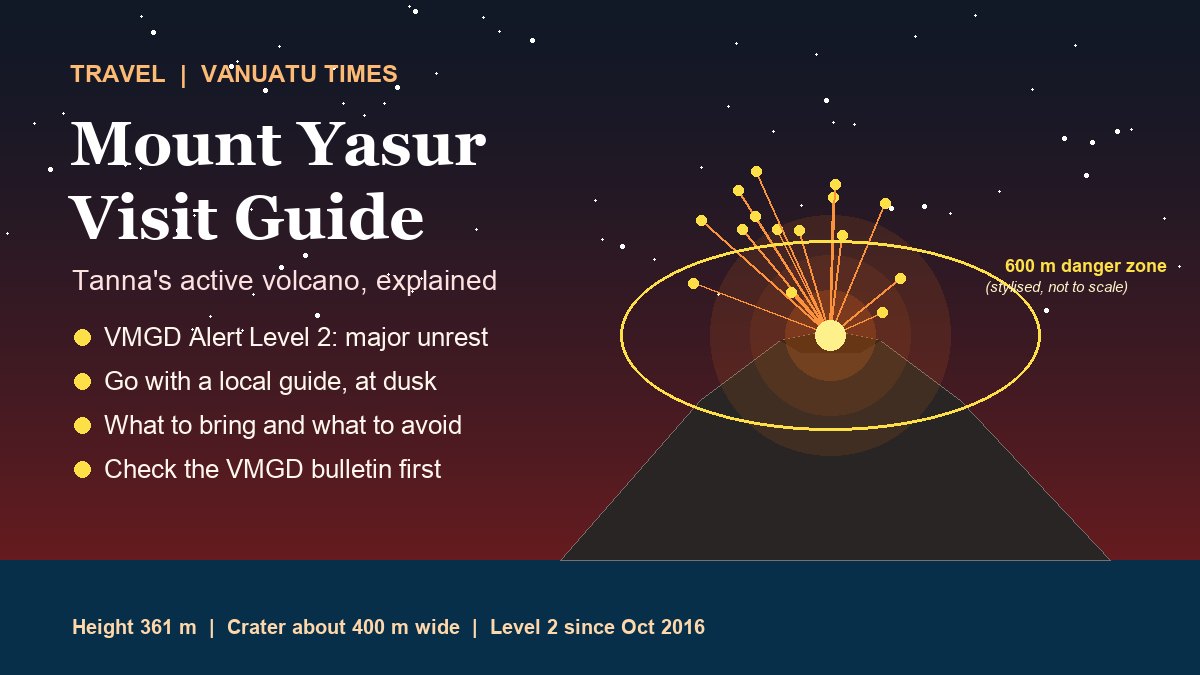
Short answer: Mount Yasur, on the south-east tip of Tanna island, is one of the few volcanoes in the world where you can stand on the crater rim and watch it erupt. It is open to visitors, but it is not a theme park: the Vanuatu Meteorology and Geo-Hazards Department (VMGD) has kept Yasur at Alert Level 2, "major unrest", since 18 October 2016, and says explosions, lava bombs, gas and ash are a real hazard near the vents. Go with a local guide, go in the late afternoon for the glow, and check the current VMGD alert level on the day.
Yasur is back in travel features this month, and it is also the volcano people ask about after the strong earthquakes off northern Santo on 24 and 25 October 2026. Those quakes were far to the north of Tanna, and the VMGD volcano page still listed Yasur at Level 2 on 28 October 2026, the same level it has held for ten years. Here is what that actually means for a visit.
Mount Yasur at a glance
- Where: south-east Tanna, in the Tafea province, near Sulphur Bay and Port Resolution.
- Size: a 361 metre (1,184 ft) scoria cone with a nearly circular summit crater about 400 metres wide, according to VMGD.
- Activity: Strombolian and Vulcanian explosions, often several an hour. VMGD says it has been in more or less continuous activity since Captain Cook saw its glow in 1774, and the style of activity may have lasted around 800 years.
- Current alert level: Level 2, "major unrest", shown on the VMGD volcano page on 28 October 2026.
- Heritage status: the Yasur-Yenkahe volcanic complex was included in the IUGS list of 100 geological heritage sites in October 2022. It is sometimes called the lighthouse of the Pacific.
- The name: from the Kwamera word iasur, which simply means volcano.
What Alert Level 2 means
Vanuatu uses a six-step volcanic alert scale from 0 to 5, and an eruption can happen at any level. VMGD describes Level 2 at Yasur as "major unrest, with a volcanic hazards danger zone of 600 m radius from the eruptive vents". In its March 2025 bulletin the department added that the danger zone, called Danger Zone A on the Yasur safety map, is hazardous because of volcanic projectiles, ash and gases, that lava bombs may fall in and around the crater rim, and that eruptions can occur with little or no warning.
In plain terms, this is the normal condition of the volcano, not a special warning. Visitors are expected to see and feel explosions from the rim. What the level does tell you is that nobody can promise a risk-free visit. Treat the guide's instructions as rules, not suggestions: where to stand, when to move back from the edge and when to leave.
The last big ash event recorded on the VMGD page was 21 to 23 October 2021, when Vulcanian explosions threw lava bombs and a thick ash column was blown south and south-east. Villages in the caldera, especially those downwind of the trade winds, can get ash fall and acid rain when the cloud rises several kilometres.
How a typical visit works
Exact logistics change, so confirm the details with your lodge or tour operator when you book. The usual pattern is:
- Fly to Tanna. Flights from Port Vila take about 45 minutes. Our guide to flights to Vanuatu covers how domestic and international routes connect, and our Tanna island guide covers where to stay and what else to see.
- Book a local guide. Yasur is on custom land, and local people run the access, the transport and the guiding. Travel guides such as Wikivoyage note that only local people act as guides on Tanna. Most guesthouses arrange the trip and the fee for you.
- Time it for dusk. Most groups arrive in the late afternoon, walk up while it is still light, and stay as the sky darkens, when the red glow and bursts are easiest to see. You will usually be back after dark, so bring a head torch.
- Follow the guide on the rim. The guide decides how close the group goes, based on how the volcano is behaving that day. If explosions are unusually strong, expect the visit to be cut short.
What to bring
- Closed shoes with grip; the final slope is loose volcanic ash.
- A head torch with spare batteries, plus a warm layer, because the rim is exposed and windy after sunset.
- A light rain jacket, since Tanna weather turns quickly, and a buff or cloth for gas and dust.
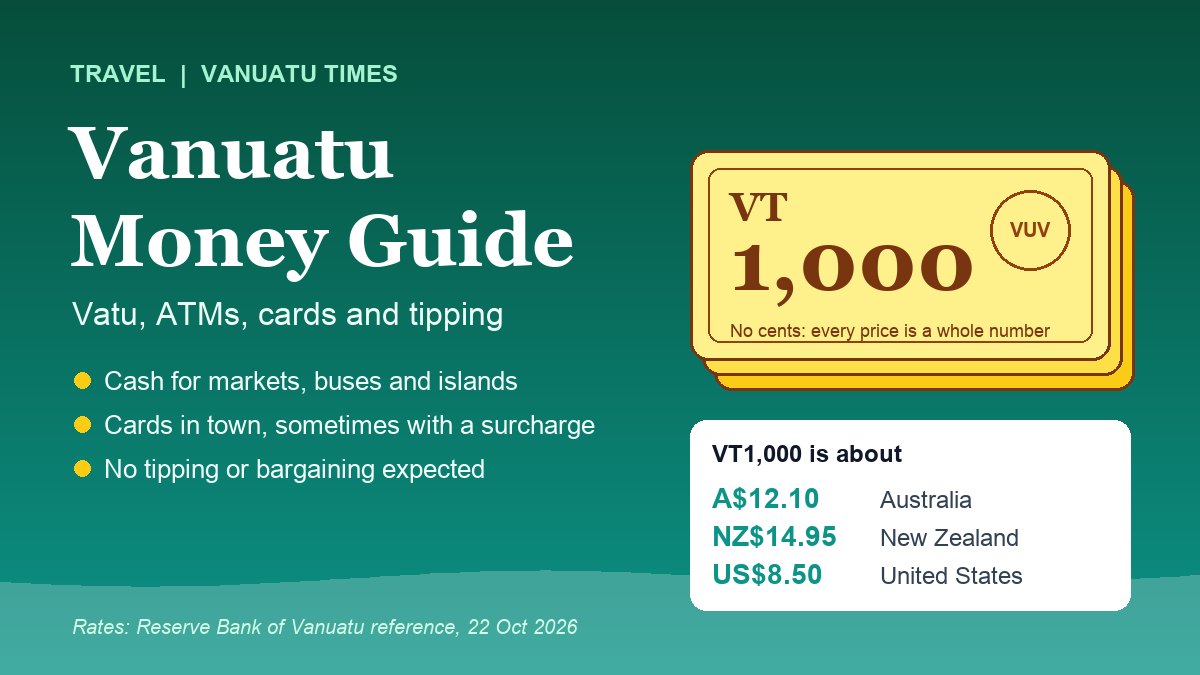
- Water, and cash in vatu for the custom fee and any tip. See our Vanuatu money guide for ATMs and cards, and carry cash because card machines are rare outside the main towns.
- Travel insurance that explicitly covers active-volcano visits, and a plan if you are asthmatic or sensitive to gas.
How to check the volcano before you go
The most reliable source is VMGD itself. Its volcano page lists the current alert level for every Vanuatu volcano, publishes bulletins whenever activity changes significantly, and carries the Yasur volcano survival guide, the long-term hazard map for Tanna and a Tanna communities safety map. VMGD also advertises a toll-free information line, 116, on its website. Check the page the day before and again on the morning of your visit. As this was written on 28 October 2026, VMGD listed Yasur at Level 2, Ambrym and Ambae at Level 3, and several other volcanoes at Level 1 or 2.
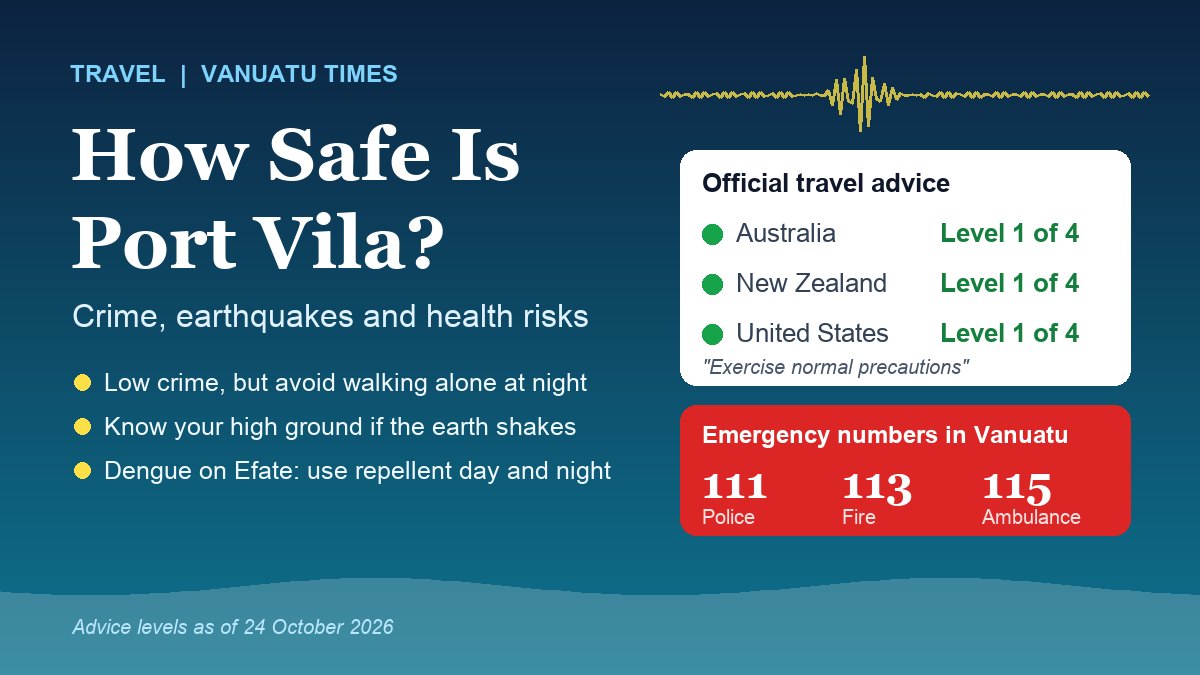
If the level rises, or the bulletin changes the danger zone, follow it over any tour operator or blog, including this one. Our Vanuatu safety guide explains how to read official travel advice and what to do in an earthquake or tsunami warning.
When to go
The drier months, roughly May to October, give you the best chance of clear skies, which matters because cloud can hide the glow completely. November to April is the wet and cyclone season, with more cancellations and slippery tracks. Our Port Vila weather by month guide explains the seasons, and Tanna is usually a little cooler and breezier than the capital.
Respect the volcano as a sacred place
Yasur is not only a tourist attraction. It is central to the John Frum movement, whose followers at Sulphur Bay regard the volcano as the home of John Frum, and the surrounding land belongs to local custom owners. Ask before photographing people, dress modestly in villages and do not wander off the path your guide sets. Our explainer on kastom shows why these rules matter and how tourism income helps communities.
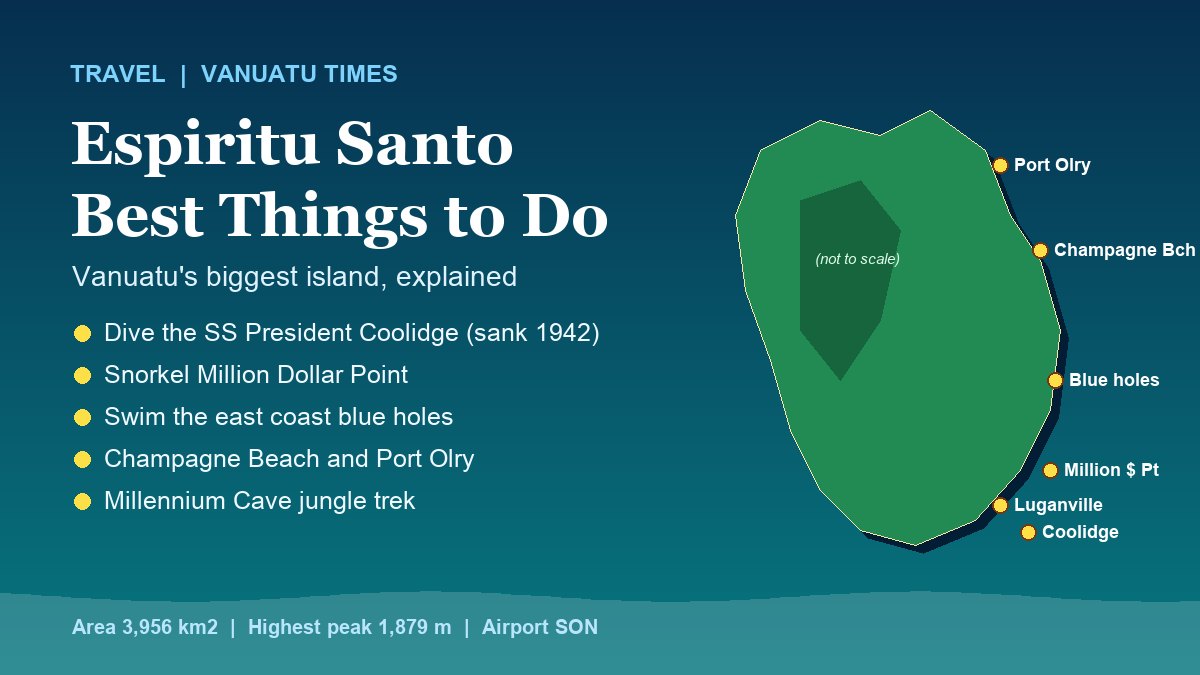
If you want to compare outer islands, Tanna is the volcano and culture trip, while Espiritu Santo is the wreck diving and blue hole trip. Many travellers do both in one longer visit.
Frequently asked questions
Is Mount Yasur safe to visit?
It is visited daily, but it is not risk-free. VMGD classes it as major unrest, warns of lava bombs, gas and ash near the crater, and says eruptions can occur with little or no warning. Use a local guide, follow instructions and check the current alert level.
Can you see lava at Mount Yasur?
You usually see explosions that throw glowing lava fragments from the vents, especially at dusk and after dark. Visibility depends on weather, wind and how active the volcano is that evening.
Do I need a guide?
Yes, in practice. Access runs through the local custom owners and the guides they work with, and the guide manages safety on the rim. Ask your lodge to arrange it.
How many days do I need on Tanna?
Two nights is enough for the volcano and one village visit. Three or four nights lets you add the coast, the blue holes and a slower pace. See the Tanna guide for ideas.
Did the October 2026 earthquakes change anything at Yasur?
Not according to VMGD. The strong quakes were off northern Santo, and the Yasur alert level shown on the VMGD site on 28 October 2026 was still Level 2.
Sources
- VMGD: Yasur volcano page, alert level, eruption history and safety resources
- VMGD: Vanuatu volcano alert level summary
- VMGD via ReliefWeb: Volcano Alert Bulletin no. 3, Tanna activity (27 March 2025)
- Mount Yasur: geology, name, John Frum, IUGS geological heritage listing
- Wikivoyage: Tanna island travel guide